3D printers, also known as three-dimensional printers, are a type of additive manufacturing technology, which is a machine that uses a digital model file as the basis, and uses special wax materials, powdery metals or plastics and other adhesive materials to manufacture three-dimensional objects by printing layers of adhesive materials.
PLA material 3D printer
—
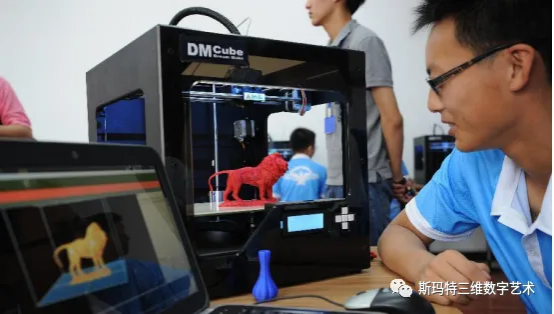
3D printers for PLA materials operate based on the FDM (Fused Deposition Modeling) principle, where a continuous material is heated and melted within the nozzle. The nozzle moves along the cross-sectional contour and fill patterns of the part, extruding the molten material. The material quickly solidifies and adheres to the surrounding material, forming the final shape.
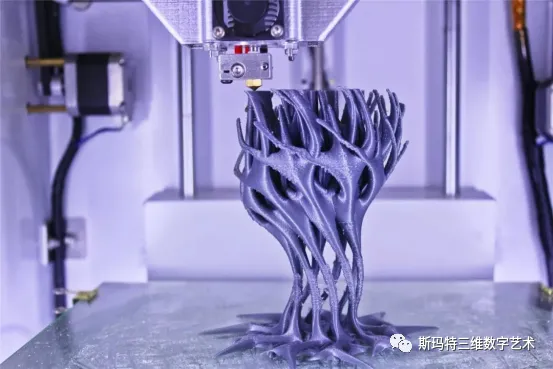
The 3D printing method of such materials has several shortcomings in teaching:
Firstly, the molding speed is slow, due to the limitation of the nozzle diameter, the layer height is very small when printing with this printing method (cannot be greater than the nozzle diameter, generally 0.2mm or 0.4mm), resulting in a slow molding speed;
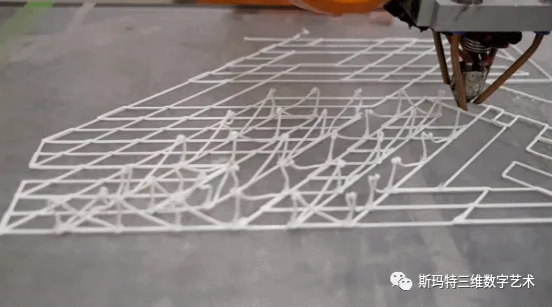
Secondly, the nozzle needs to heat the wire-like material, so it needs to be heated to about 200 degrees Celsius, which is an unsafe factor for students full of curiosity;
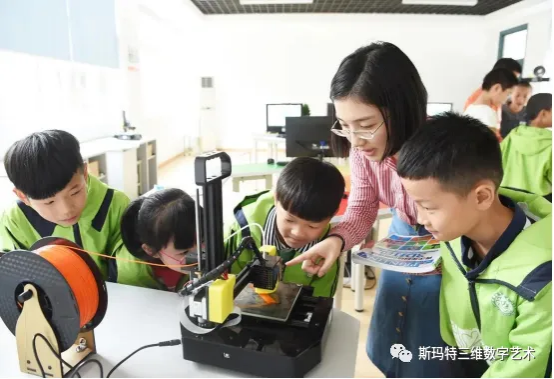
The third is that the work is completed in one go, and the student's creativity can only be reflected in the modeling stage.
Clay material 3D printer
—
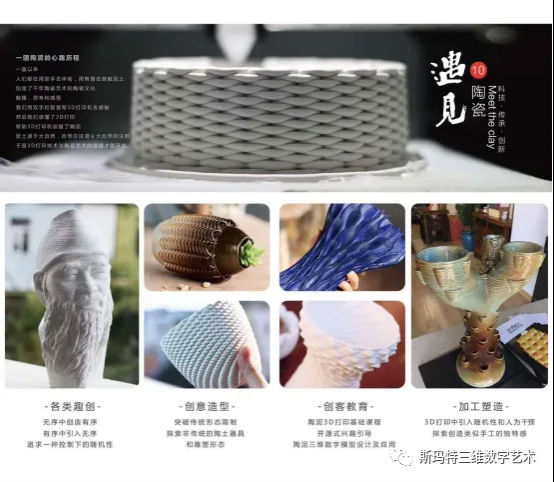
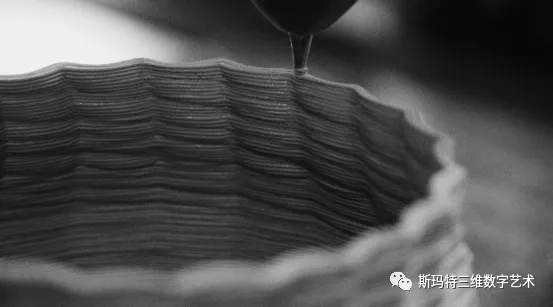
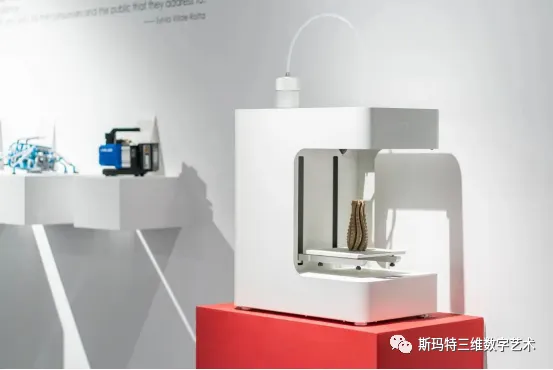
3D printers of clay materials operate on the principle of semi-solid deposition molding, the working process is that the clay, which is semi-solid, is extruded through the equipment into the nozzle, without the need for a heating process, and the nozzle moves along the contour of the cross section of the part and the side of the filler track, adhering to the surrounding material to form.
The advantages of this approach are:
Firstly, the molding speed is fast, the clay nozzle can be made thicker, the layer height of each layer printed can be very high, and the printing speed can be improved. In the case of not affecting students' understanding of the principle of 3D printing, students' designed works can be printed and completed in the same class, which can achieve timely feedback in teaching.
Second, it does not require high temperature heating, and safety is guaranteed;
Third, raw materials can be reused;
Fourth, raw material prices are cheap and easily obtainable;
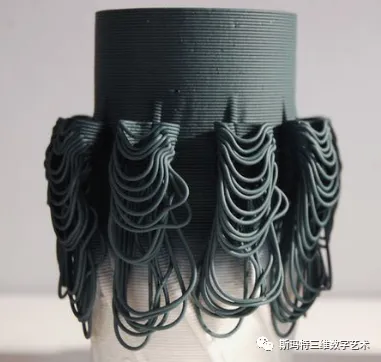
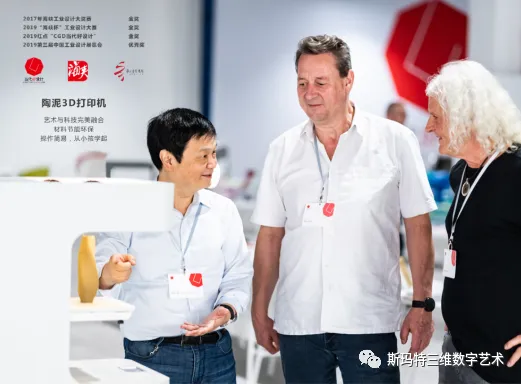
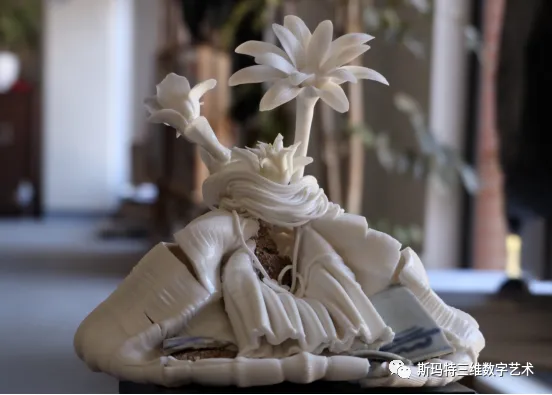
Fifth, after the completion of the printed work, it can also be secondary processed on the basis of the printed work due to the characteristics of the clay, achieving a perfect combination of art and technology.